
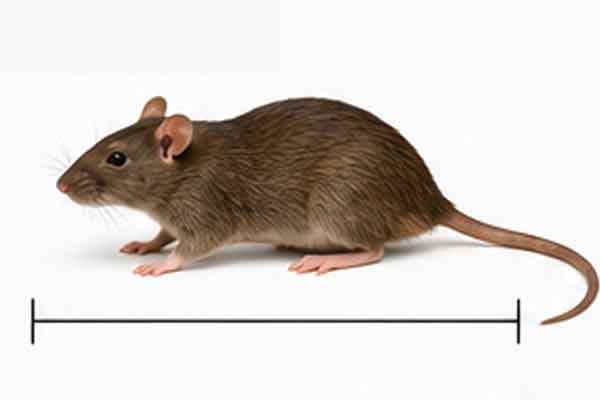
Larger rodents may grow to a body length of 10 to 12 inches. Seldom will a rat weigh more than one pound.

Can vary from grey to brown to black. Found in coastal states or in agricultural lands, roof rats have long tails, thin bodies, and are large eyes and ears. Other kinds of rats are more prevalent in urban and rural areas, and are found in homes less often than mice because of larger size.

Outside, rats live in fields, wooded areas, vacant lots, farms, and just about anywhere. Rats are seldom a problem in homes except in urban and rural areas. Rats however, may find harbourage in many areas around the home - especially in stacked firewood, stones and bricks, and piles of leaves or other debris.
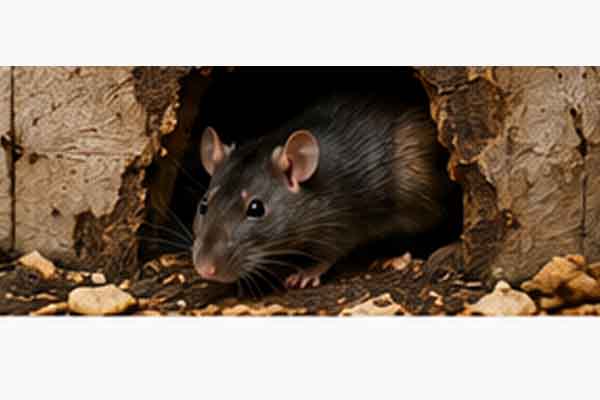
Few people really like rats or mice, and no one wants them in their house. Rodents live everywhere outside and could enter at any time, but fortunately, this does not occur often. Usually, most home invasions occur in the autumn months, because the seeds and plants on which rodents though to enter.
The best way to avoid invasions of rats is to provide as little harbourage/storage as possible that might attract rodents.
Seal as many holes and cracks in the outside of the home as possible through which rats might enter.
The following recommendations should be followed to help prevent rats from seeking the food and shelter provided by your home.
If possible, remove any piles of debris, stones, bricks, etc. near the foundation of the home they serve as harbourages to attract rodent.
Seal any hole or crack larger than 1/4 of an inch.
Large holes or cracks should be stuffed with steel wool or wire mesh before sealing with caulk or foam, otherwise rodents could chew though to enter.
Get eco-friendly protection and seal them out for good.
BOOK FREE INSPECTION